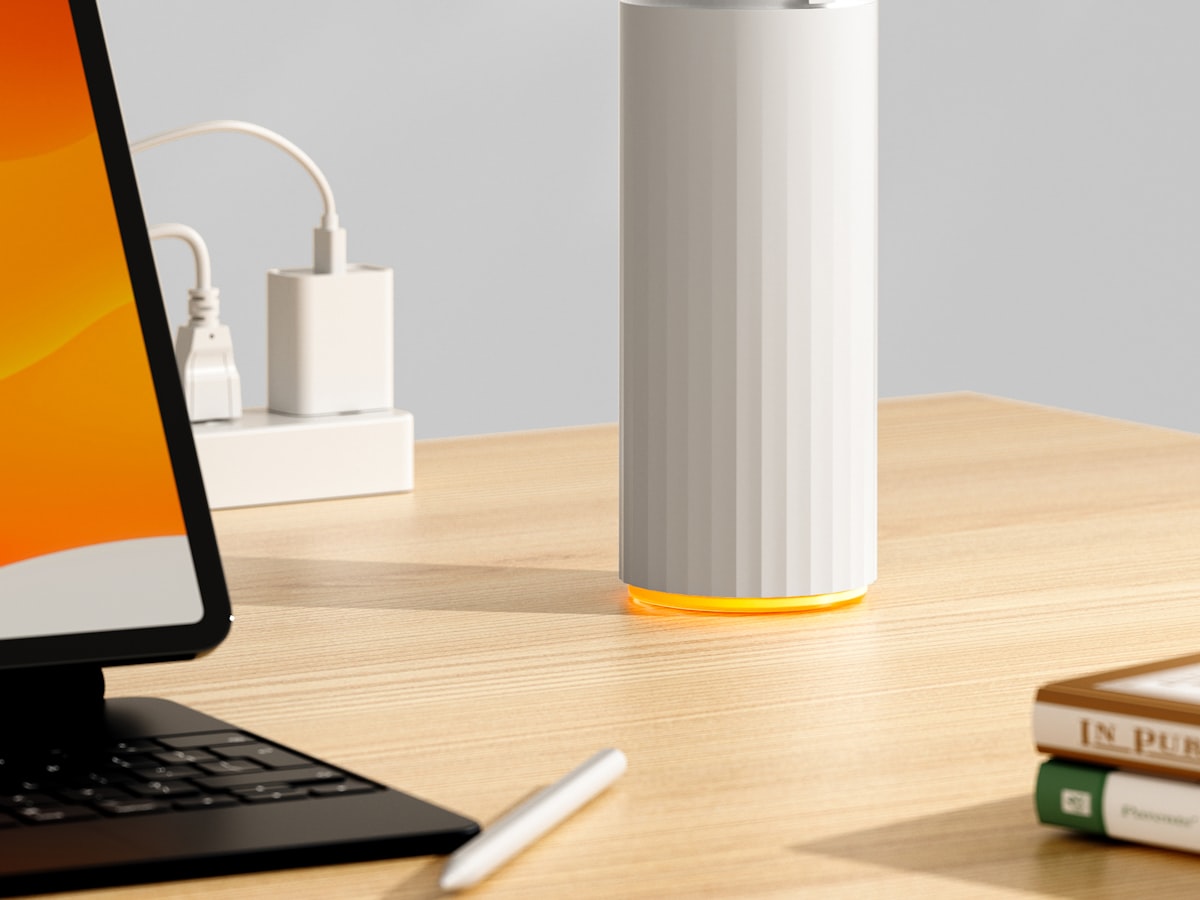
Dry indoor air is sneaky. It shows up as a scratchy throat at 3 a.m., static that zaps you off the doorknob, cracked lips, a piano that won't hold its tuning, and that faint nosebleed you blame on "the season." A humidifier fixes all of it, but only if you buy one that can actually move enough water into the air of your particular room. Buy too small and it runs all day fighting a losing battle; buy too big and you fog your windows and invite mold. Neither is what you want.
The good news is that sizing a humidifier comes down to one honest number that manufacturers love to bury under marketing: how many gallons of moisture it can put into the air per day. Get that number right for your space and climate, and everything else, warm versus cool mist, tank size, filters, is just personal preference. This guide walks you through the math in plain English, then tells you which specs are worth paying for and which are noise.
How to size a humidifier: the one number that matters
Ignore the square-footage badge on the box for a second and look for the output rating in gallons per day (sometimes written as GPD or "moisture output"). That is the humidifier's real horsepower, how much water it can turn into mist over 24 hours. Our rule of thumb: plan on roughly 1 gallon per day for every 350 square feet of space in moderately dry conditions, and bump that up in winter or in a genuinely arid climate, where the air pulls moisture out of everything much faster.
Here is a worked example. Say you want to humidify a 700-square-foot open living-and-kitchen area. At 350 square feet per gallon, that's a 2-gallon-per-day job in normal conditions. But it's January, your furnace is blasting, and the outdoor air is bone-dry, so add a margin and target something rated around 2.5 to 3 gallons per day. A tabletop unit rated for "up to 500 sq ft" won't cut it here; you want a mid-size or console model. For a single 200-square-foot bedroom, the math flips: well under a gallon a day is plenty, and a small unit that holds enough water to run overnight without refilling is the real priority.
The target you're aiming for is 30 to 50 percent relative humidity. That band is comfortable, protects wood and instruments, and stays below the roughly 50 to 60 percent point where dust mites and mold start to thrive. So size for enough output to reach that range, then let a humidistat or hygrometer keep you there, rather than buying the biggest machine you can find and blasting it. More output is only better up to the point where the air is comfortable; past that, you're just making problems.
The specs that matter after size
Once output is sorted, a handful of specs separate a humidifier you'll happily live with from one you'll quietly unplug in a month.
A built-in humidistat is the single best feature to pay for. It measures the room and shuts the unit off when you hit your target, so you're not guessing or over-humidifying. Without one, you're the humidistat, and you will forget. Tank capacity is next: it decides how often you refill, not how much area you cover. A 1.5-gallon tank on a low setting can run overnight; a small 0.5-gallon tank in a dry room might beg for water twice a day. Then think about the tank opening and shape, because a narrow spout you can't fit a hand into is a cleaning nightmare, and humidifiers must be cleaned.
Also weigh noise, since anything running in a bedroom needs to be quiet, and maintenance cost. Evaporative models use replaceable wick filters that run a few dollars every one to three months; factor that into the true price. Run-time-per-tank and a clearly visible water level round out the list. Skip the gimmicks. Color-changing lights, aromatherapy trays, and app connectivity are nice-to-haves, not reasons to choose one unit over another that sizes and cleans better.
Choosing between the main types
There are three types worth knowing, and the choice is mostly about your room, your water, and who's nearby.
Evaporative (cool mist) humidifiers blow air through a wet wick. They're self-regulating, meaning they naturally slow down as the room gets humid, and they won't over-saturate the air or spray mineral dust around. The tradeoffs are a bit of fan noise and a wick you replace on a schedule. This is the safe, sensible default for most homes, especially larger rooms. Ultrasonic (also cool mist) units use a high-frequency vibration to fling out a fine, near-silent mist. They're wonderfully quiet, which makes them great for nurseries and bedrooms, but if you have hard water they can coat the room in fine white mineral dust; use distilled water or a demineralization cartridge to avoid it.
Warm-mist units boil water into steam, so the output is clean and germ-free and adds a touch of cozy warmth in winter. The catch is a tank of hot water, which is a real burn risk, so most people steer them away from rooms with young kids or pets, and they draw more electricity. My honest take: for a big dry living room, go evaporative; for a quiet bedroom on soft or distilled water, go ultrasonic; reserve warm mist for adults who specifically want the winter warmth. And if you're trying to humidify a whole floor rather than one or two rooms, stop shopping tabletop units and look at a console or a whole-house model that ties into your furnace, because chaining together three small machines is a losing game.
Placement, setup, and running it efficiently
Where you put a humidifier changes how well it works as much as the machine itself. Set it a foot or two off the floor on a table or shelf, not on carpet, so the mist disperses into the room instead of soaking the surface right below it. Keep it a few feet from walls and furniture to avoid damp spots and warping, and away from electronics. Don't tuck it in a corner or behind the couch; it needs open air around it to circulate moisture.
Buy a cheap standalone hygrometer and put it across the room from the unit, not next to it. It's the honest referee that tells you whether you're actually in the 30 to 50 percent zone, and it'll cost you less than a filter. If you see fog on the inside of your windows, that's your cue you've overshot, dial it back, because that condensation is where mold starts. In very cold snaps you may need to run it lower than usual to keep the windows clear.
For efficiency and health, run it on a lower setting for longer rather than blasting it, empty and dry the tank daily, and do a proper vinegar-and-water clean every week or so. Use distilled or demineralized water if your tap is hard; it cuts white dust and mineral scale and makes cleaning far easier. A humidifier is one of the few appliances where neglect doesn't just shorten its life, it can actively spray bacteria and mold into the air you breathe, so the maintenance isn't optional, it's the whole point.
Common mistakes to avoid
- ✕Buying by the square-footage sticker while ignoring the gallons-per-day output rating
- ✕Oversizing "to be safe" and fogging your windows, which breeds mold above 50-60% humidity
- ✕Skipping the $10 hygrometer, so you're guessing at humidity instead of measuring it
- ✕Choosing an ultrasonic unit for hard-water homes and then fighting white mineral dust everywhere
Get your exact number
Skip the guesswork — the humidifier calculator sizes yours in about ten seconds.
Frequently asked questions
What size humidifier do I need for my room?
Match the gallons-per-day output to your space: plan on about 1 gallon per day for every 350 square feet in moderately dry conditions, and more in winter or arid climates. A single bedroom needs well under a gallon a day, while a 700-square-foot living area wants roughly 2 to 3 gallons per day. Size for enough output to reach 30 to 50 percent humidity, not the biggest unit you can find.
What humidity level should I aim for at home?
Keep indoor relative humidity between 30 and 50 percent. That range keeps you comfortable and protects wood and instruments while staying below the 50 to 60 percent point where dust mites and mold thrive. A cheap hygrometer lets you see your actual number so you can dial the humidifier up or down.
Is warm mist or cool mist better?
Cool mist is the better default for most homes: it's energy-efficient and safe around kids and pets. Warm mist boils the water first, so the output is germ-free and adds a little cozy warmth in winter, but the hot tank is a burn risk and it uses more electricity. Pick cool mist unless you specifically want the winter warmth and there are no small children around.
Why does my humidifier leave white dust everywhere?
That white dust is dissolved minerals from hard tap water, and it's most common with ultrasonic humidifiers that vibrate the water into mist. Switch to distilled or demineralized water, or add a demineralization cartridge, and the dust largely disappears. Evaporative (wick) models don't cause it because the wick traps the minerals instead.
Can a humidifier be too big or cause mold?
Yes. If output exceeds what the room needs, humidity climbs past 50 to 60 percent and you get condensation on windows, damp walls, and eventually mold and dust mites. That's why a humidistat and a hygrometer matter more than raw power. Size for your space, aim for 30 to 50 percent, and back off the moment you see fog on the glass.
Our top humidifiers
Pure Enrichment MistAire Ultrasonic Cool Mist Humidifier
GearSizer may earn a commission on purchases made through links on this page. Learn more.