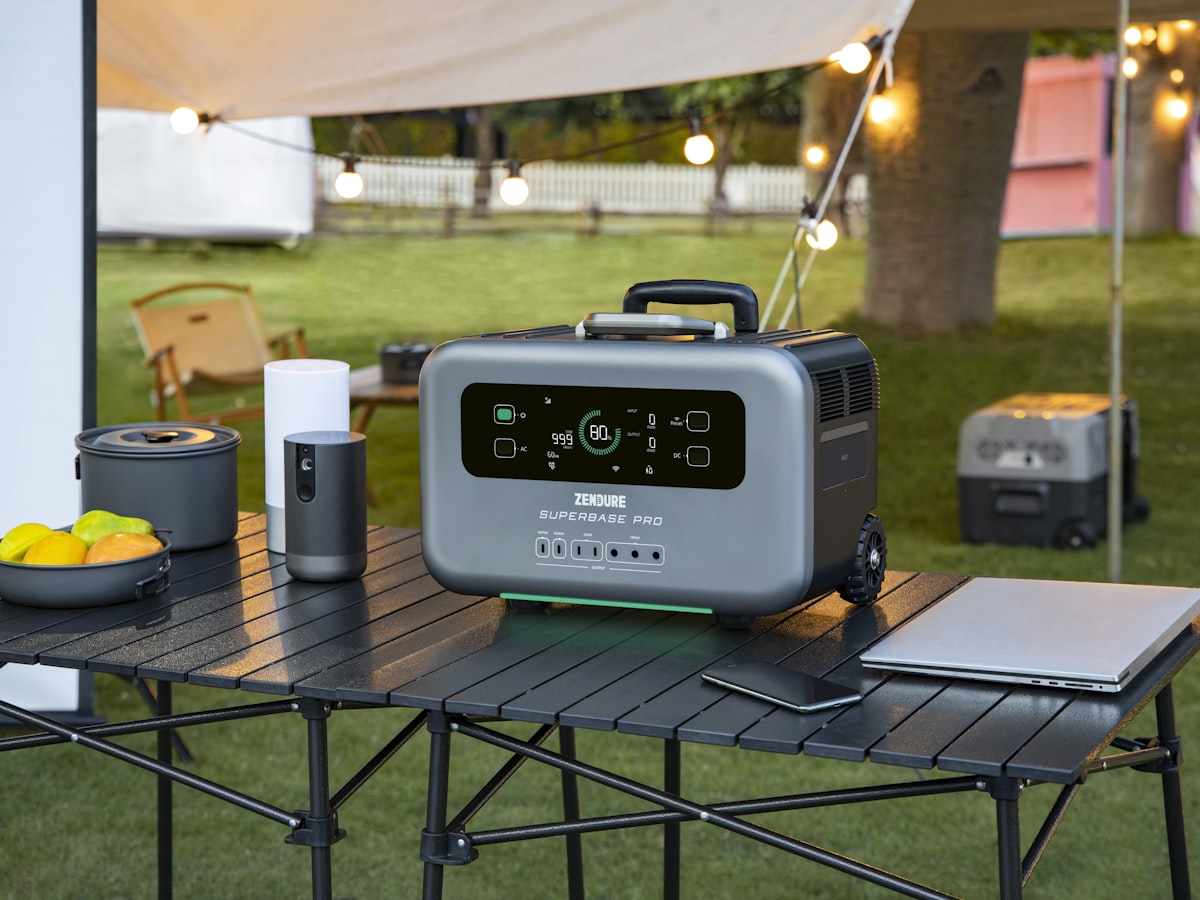
A power station is basically a big battery in a box with regular wall outlets on the front. It's the thing that keeps your fridge cold during an outage, runs your CPAP while you camp, and lets you work through a blackout without watching your laptop die. The catch: the number on the marketing photo is almost never the number you actually need, and buying too small is a genuinely miserable experience.
The good news is that sizing one correctly comes down to two numbers and a little grade-school math. Once you understand watt-hours (how much energy it holds) and output watts (how much it can push at once), you'll cut through the spec-sheet noise in about five minutes. This guide walks you through the exact formula we use, then covers the specs that actually matter, how to choose between the main options, and how to squeeze more real runtime out of whatever you buy.
How to size a power station (the two-number rule)
Every power station lives or dies on two specs: watt-hours (Wh), which is how much energy the battery holds, and output watts (W), which is how much it can deliver at any one instant. You have to get both right, and they answer different questions. Watt-hours answer "how long will it run my stuff?" Output watts answer "can it run my stuff at all?"
Here's the rule, plainly: multiply each device's watts by the hours you'll run it, add those numbers together, then pad the total by about 20% to cover losses (inverters and batteries are never 100% efficient). That padded number is the watt-hour capacity you should shop for. Separately, add up the watts of everything you might run at the same time, and make sure the station's continuous output rating comfortably exceeds that peak.
A worked example. Say you're powering an outage: a fridge that averages 100W and runs about 8 hours over the day (compressors cycle on and off), a few LED lights at 30W for 5 hours, and phone-and-laptop charging at 60W for 4 hours. Energy: (100 x 8) + (30 x 5) + (60 x 4) = 800 + 150 + 240 = 1,190Wh. Pad by 20%: 1,190 x 1.2 = about 1,430Wh. So you want a station of roughly 1,500Wh or more. Now the output check: if the fridge (say 120W running), lights (30W), and chargers (60W) are all on together, that's a little over 200W at once, so almost any 1,000W-plus unit clears that bar easily. The energy budget, not the output, is what sizes this purchase.
The specs that actually matter beyond size
Once capacity and output are settled, a handful of other specs separate a station you'll love from one you'll resent. Battery chemistry is the big one. Look for LiFePO4 (also written LFP). It's heavier than the older NMC lithium chemistry, but it typically survives thousands of charge cycles instead of hundreds, so it lasts far longer if you cycle it often, and it runs cooler and safer. If you plan to use the station regularly, LFP is worth the extra weight and cost, full stop.
Next, check that the AC inverter is pure sine wave, not modified sine wave. Pure sine wave produces clean power that sensitive electronics, motors, and medical devices like CPAPs expect. Also look at surge (or peak) watts, which is the brief spike a station can deliver above its continuous rating; anything with a motor or compressor, like a fridge or a power tool, draws two to three times its running watts for a split second at startup, and an undersized inverter will simply trip.
Finally, weigh the practical stuff: solar input (in watts) if you want to recharge off-grid, whether it has true UPS or pass-through so it flips to battery in milliseconds when the grid drops (important for a home office or a fish tank), expandability if you might want more capacity later, and the number and type of ports. A stack of USB-C PD ports and a 12V outlet often matter more day to day than one extra AC socket.
How to choose between the main options
Start with size class, because it maps cleanly to use case. Roughly 300 to 500Wh is a lightweight companion for camping, phone-and-laptop charging, and a fan or CPAP overnight. Around 1,000Wh is the sweet spot for remote work, road trips, and short outages. 2,000Wh and up moves into serious home backup, running a fridge plus essentials for a day or more. Bigger costs more and weighs more, so buy for the job you actually have, not the apocalypse you're imagining.
Expandable vs. fixed is the next fork. Many mid and large stations accept add-on battery modules. If your needs might grow, or you want home backup someday, an expandable base unit lets you start smaller and bolt on capacity later without rebuying the inverter. If you know your ceiling, a fixed unit is usually cheaper per watt-hour.
And know when a power station is the wrong tool. It's a quiet, fuel-free, indoor-safe battery, which is ideal for portability, sensitive electronics, and outages measured in hours to a day or two. For multi-day outages where you can't recharge, or for running central AC and a whole house, a gas or standby generator delivers more raw, sustained power. Many people end up owning a power station for the 90% case and keeping a generator or solar panels for the rare long haul.
Placement, setup, and efficiency tips
Where and how you run the station affects how much usable power you actually get. Keep it in a shaded, ventilated spot with airflow around the vents; heat is the enemy of both runtime and battery life. Cold hurts too, so if it's freezing, keep the unit somewhere insulated rather than out in the elements, and never run one in a fully sealed cabinet where the cooling fans choke.
The fastest way to waste capacity is running the inverter to power things that don't need AC. Every time the station converts DC battery power to AC wall power, you lose energy to the inverter. So charge phones, tablets, and laptops straight from the USB and USB-C ports, and run 12V gear (fans, fridges, lights) off the DC outlets when you can. You'll often stretch runtime meaningfully just by skipping the AC wall plugs.
A few more habits pay off. If you're pairing solar, match the panel wattage to the station's input rating and expect real-world charge speeds below the sticker number on cloudy days. Store the unit around half charged if you won't use it for months, and top it off before a trip or storm. And with LiFePO4, don't baby it; these batteries are happiest being used, so regular cycling keeps them healthy rather than wearing them out.
Common mistakes to avoid
- ✕Shopping by output watts and ignoring watt-hours, so it runs your gear but dies in an hour
- ✕Forgetting the ~20% efficiency pad and buying a station that's technically too small on paper
- ✕Overlooking startup surge, so the inverter trips the moment the fridge or power tool kicks on
- ✕Choosing cheaper NMC over LiFePO4 for a unit you'll cycle constantly, then replacing it years too soon
Get your exact number
Skip the guesswork — the portable power station calculator sizes yours in about ten seconds.
Frequently asked questions
What size power station do I need for a home outage?
Add up the watts of each device times the hours you'll run it, sum them, and add about 20% for losses to get your watt-hours. For a fridge plus lights and device charging over a day, that usually lands around 1,000 to 2,000Wh. Also confirm the continuous output watts exceed everything you'd run at once, which is rarely the limiting factor for household essentials.
How long will a power station run my refrigerator?
Take the station's watt-hours, multiply by roughly 0.85 for real-world efficiency, then divide by the fridge's average running watts. A fridge averages far less than its peak because the compressor cycles on and off, so a 1,000Wh station often keeps a typical fridge going for most of a day. Just make sure the output watts and surge rating cover the compressor's startup spike.
Is LiFePO4 really worth it over regular lithium?
For most buyers, yes. LiFePO4 (LFP) typically lasts thousands of charge cycles versus a few hundred for older NMC lithium, and it runs cooler and safer, so it lasts far longer if you cycle it often. The trade-off is more weight and a higher price. If you'll use the station regularly or want it to last many years, LFP is the better buy.
What's the difference between watts and watt-hours?
Watts measure power, the rate at which the station delivers energy right now, which decides whether a device can run at all. Watt-hours measure capacity, the total energy stored, which decides how long it runs. A station can have huge output watts but small watt-hours (strong but short-lived) or the reverse, so you have to check both against your needs.
Can I run my whole house on a power station?
Usually not, and it's the wrong tool for that job. Portable power stations are built for essentials like a fridge, lights, electronics, and medical devices, typically for hours up to a day or two. Running central air conditioning or a whole house calls for a much larger home battery or a standby generator. Many people pair a power station for everyday outages with a generator or solar for rare long ones.
Our top power stations
GearSizer may earn a commission on purchases made through links on this page. Learn more.